
Location: Warsaw
Format: on-campus classesin-person

Your Brain, Your Team, Your AI – A New Formula for Leadership

The program combines the latest findings in neuroscience, psychology, and AI to help you develop skills such as decision-making, conflict resolution, team leadership, and change management.


Daria Odrobińska Krzysztof Maj Agata Kruszka
40,000+ ICAN Institute graduates View the program
Money-Back Guarantee After the First Session
4.91/5
average rating of the program
5 sessions
two-day workshops (10 days)
30+ years
ICAN trains leaders
They've placed their trust in us:
Medicover
Salesforce
Raben
Provident
Żywiec
KIR
CIMA
PGF
Imperial Tobacco
Euroterm
Aplitt
Edubroker
Medicover
Salesforce
Raben
Provident
Żywiec
KIR
CIMA
PGF
Imperial Tobacco
Euroterm
Aplitt
Edubroker
Medicover
Salesforce
Raben
Provident
Żywiec
KIR
CIMA
PGF
Imperial Tobacco
Euroterm
Aplitt
Edubroker
Medicover
Salesforce
Raben
Provident
Żywiec
KIR
CIMA
PGF
Imperial Tobacco
Euroterm
Aplitt
Edubroker
Problem

77% of leaders believe that their role is more difficult today than ever before

In today’s rapidly changing business world, traditional management methods are no longer sufficient. The rapid pace of change, market volatility, technological pressures, and evolving employee expectations require leaders to develop new competencies.

A key task for leaders today is managing emotions—their own and those of their team. Stress, pressure, and sudden crises lead to burnout, decreased effectiveness, and poor decision-making if there is a lack of tools to deal with them.

The role of leaders is changing at an ever-faster pace

Nevertheless, they are expected to deliver results, show empathy, and provide stability at the same time

0%

The pace of organizational change has increased by this much in recent years

0%

Leaders believe that their role is more challenging than ever before

0%

Leaders feel pressure to provide emotional support to their teams

0%

So many leaders feel prepared to look after their team's mental health

Source: Neuroleadership Institute; Modern Health
Solution

Discover ICAN NeuroManager™

A management competency development program based on neuroscience and the practical application of AI. For leaders who are responsible for people, results, and change—and who need new tools to navigate new circumstances.

40000+
trained managers
5
two-day sessions
30
years of experience at ICAN
The Foundation of the Program

Neuroscience and AI together offer an advantage, that you can't achieve on their own

AI provides data and speed. Neuroscience helps you understand how the human brain—yours and your team’s—responds to stress, change, and pressure. Combined, they give leaders what no technology alone can provide: sound decisions made quickly, without losing control of emotions and relationships.

Neuroscience

explains why people react the way they do

AI

says what the data and patterns show

Leader

decides what to do about it—and takes responsibility for it

Would you like to implement this integration in your organization?

Reserve a seat
Money-Back Guarantee After the First Session
Our Concept

Modern leadership begins in the mind. Literally

ICAN NeuroManager™ combines the latest discoveries in neuroscience, psychology, and management with the practical application of AI. It is the only program in which artificial intelligence is an integral part of every session and module, rather than an add-on.

Pillar 1

Neuroscience and the Psychology of Leadership

The program introduces leaders to the inner workings of the human brain, showing why they react emotionally to stress, change, and uncertainty, and how to regulate those emotions.

  • The SCARF Model and the Neurobiology of Stress
  • Regulating Emotions and Building Mental Resilience
  • The Kübler-Ross Grief Curve and Mechanisms of Resistance
  • Model 4C and the Concept of Anti-Fragility (Nassim Taleb)
  • Psychological Safety (Research by Amy Edmondson)
+
Pillar 2

AI as a Leader's Partner

Artificial intelligence serves as a manager’s “external brain” — it supports data analysis and decision-making, but does not replace human intuition and responsibility.

  • AI in Problem Analysis and Solution Generation
  • AI in Detecting and Mitigating Team Conflicts
  • AI as a “silent advisor” in negotiations
  • Conscious prompt engineering and the use of digital tools
  • Monitoring Team Morale and Workload
Synergy effect

Neuroscience gives leaders an understanding of themselves and their teams, while AI provides data and tools—together, they create leaders who combine soft skills with technological proficiency.

Reserve a seat
Money-Back Guarantee After the First Session
Video invitation

See what's in store for you with ICAN NeuroManager™

Watch the invitation from Dr. Iwo Zmyślony, an expert on the program, and discover what you’ll learn from the perspectives of neuroscience and management practice.

Video Invitation – Dr. Iwo Zmyślony
Diagnostic test

Are you ready to take on the role of a transformation leader?

The world of work is changing, and with it, the role of a leader. Answer the following questions with YES/NO and find out if the ICAN NeuroManager™ program is the right next step in your professional development.

10 questions · about 2 minutes · results with an explanation right away

ICAN NeuroManager™ Self-Assessment Test
For whom

Who will benefit the most from participating in the program?

ICAN NeuroManager™ is designed for leaders who are responsible for people, results, and change, and who want to develop their competencies in the context of a more complex and dynamic environment.

Experienced operations managers

Department heads and process managers who are responsible for results, continuity, and the implementation of changes.

Functional Directors and Senior Executives

Professionals working in HR, sales, finance, and operations, who combine strategy with team leadership.

Leaders of Change and Transformation

Those who implement AI and new processes and lead teams through successive changes—regardless of their formal title.

This program is NOT for you if:
  • Are you looking for a one-time shot of inspiration, rather than a change in habits?
  • You expect ready-made solutions without having to do any work yourself yourself
  • You're just starting out on your journey in team management
  • You don't have time to get involved between sessions
  • You view AI as a threat rather than a tool
This program IS for you if:
  • You manage a team and feel that the old methods are no longer enough
  • Do you want to learn how to manage your emotions under pressure
  • Are you looking for practical tools for decision-making and conflict resolution?
  • Do you want to make informed use of AI in your work?
  • Are you ready to work on your habits?

Don't wait until change catches you and your team off guard.
Be prepared with ICAN NeuroManager™.

Reserve a seat
Money-Back Guarantee After the First Session
Program Outcomes

The development of a leader, which leads to the growth of the entire organization

Every skill acquired in the program has a tangible impact on the functioning of the team and the organization. See what the leader gains and what the company gains.

1
Better decisions under pressure

Understanding the brain's decision-making mechanisms will allow you to make sound choices in situations of uncertainty and time pressure.

2
Greater emotional intelligence and mental resilience

You will effectively manage your emotions and recognize the emotions of others, which will allow you to respond more effectively in difficult situations.

3
Conflict and Change Management Skills

You will develop the skills to manage resistance to change, which will increase the effectiveness of transformations within the company.

4
Readiness for Leadership in the Age of AI

You'll be better able to harness the potential of technology to digitize processes and tasks, making your company more innovative and competitive.

5
Greater self-confidence as a leader

You'll gain greater awareness of your strengths and discover authentic leadership based on self-awareness.

6
More Effective Interpersonal Communication

You'll learn not only how to persuade others of your ideas, but also to listen actively and effectively resolve communication issues within your team.

Report participation
Money-Back Guarantee After the First Session
Return on Investment

ROI from the program: concrete numbers, not promises

Developing leaders' competencies is an investment with a measurable return. Below are 6 areas in which the program directly contributes to the organization's financial results.

2.5–3 million PLN

Estimated annual financial impact for an organization employing 50 key leaders.

Strategy Implementation

70% of strategic initiatives fail not because of poor planning, but because of a lack of competence among the leaders responsible for linking strategy to execution.

Source: McKinsey & Company, 2023

Retaining Leaders

The loss of a single experienced leader costs 1.5–2 times their annual salary—taking into account recruitment costs and the disruption to ongoing projects.

Source: Gallup, 2024

Faster implementations

Better decisions under pressure reduce strategy implementation time by10–15%, which means faster time to market and earlier revenue.

Team Engagement

Companies with highly engaged employees generate23% higher profits—and the immediate supervisor is the key factor.

Source: Gallup, 2024

Recruitment Costs

Losing an experienced leader costs 50,000–80,000 PLN in recruitment and onboarding expenses for a successor—plus the risk of losing knowledge and relationships.

Team Productivity

Investing in leaders' decision-making skills increases team productivity by9–12% annually.

Source: Deloitte, 2025

View the full ROI calculation for your organization.

Download the brochure
Learn more

Everything you need to know— in one brochure

Download the free ICAN program brochure NeuroManager™ and learn more.
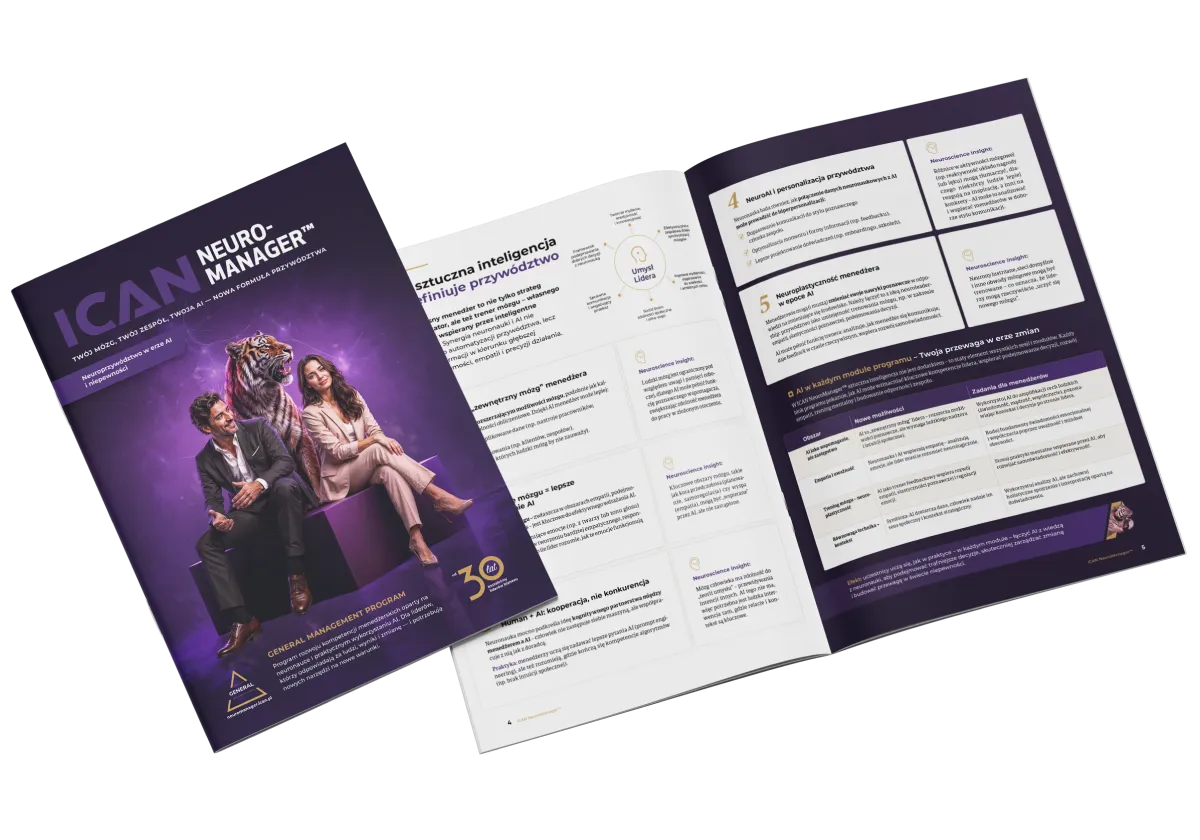
  • Neuroscience and AI in Leadership Practice: Decisions, Conflicts, Change
  • Model 4: How to Respond to Uncertainty—Test Yourself
  • Calculating ROI and the Business Value of the Program
  • Diagnostic Test for HR and the Participant
  • Detailed schedule for all 5 sessions
Download
ICAN NeuroManager™ 2026 Brochure
AI in the program

AI in Every Program Module – Your Edge in an Era of Change

In ICAN NeuroManager™, artificial intelligence is not just an added feature— it is an integral part of all sessions and modules. Each program module demonstrates how AI can enhance a leader’s key competencies, support decision-making, foster empathy, facilitate mental training, and build team resilience.

Area
New Opportunities
Tasks for Managers
AI as a supplement, not a replacement
AI is a leader’s “external brain”— it expands cognitive capabilities, but requires human oversight and social intuition.
Use AI to amplify human qualities (awareness, wisdom, compassion), while leaving context and decisions up to the leader.
Empathy and Mindfulness
Neuroscience and AI foster empathy – they analyze emotions, but a leader must understand them from a neurological perspective.
Build the foundations of emotional awareness and compassion through mindfulness and a mindset of presence.
Brain Training – Neuroplasticity
AI, as a feedback coach, supports the development of empathy, cognitive flexibility, and emotional regulation.
Use AI-supported mental practices to develop self-awareness and effectiveness.
Balance between technique and context
Symbiosis: AI provides data, while humans give it social meaning and strategic context .
Use AI analytics, but maintain a holistic perspective and an interpretation based on experience.

Result: Participants learn, in a practical way—in each module—how to combine AI with neuroscience to make more accurate decisions, manage change more effectively, and build a competitive advantage in a world of uncertainty.

Reserve a seat
Money-Back Guarantee After the First Session
What does the program look like?

5 sessions, 10 days, one transformation

The program consists of 5 two-day workshops (10 training days), preceded by a kick-off session. The sessions are held once a month in person, with a 20% theory and 80% practice ratio.

ICAN NeuroManager™ Program Schedule
Scope of content
  • Does the traditional role of a mid-level leader still exist?
  • New Challenges for Leaders at Work—Pressure to Deliver Results, Innovation, and Strategy
  • Taking Action When Data Is Incomplete
  • The AI Revolution—A Threat to "Old" Skills or a Leader's Tool?
  • Building Team Resilience and Adaptability as a Leader's Asset
  • The Leader's Paradox: Increased Responsibility and Decreased Predictability of Conditions
Benefits for Participants
  • A common language and conceptual framework for the entire program
  • Understanding How the Role of a Leader Is Changing in the Age of AI
  • Understanding the Greatest Decision-Making Dilemmas of the 21st Century
Module 1: The Leader's Brain Under Pressure
Scope of content
  • Brain Survival Mode—Mechanism and Implications for Leadership (Research by Platt, Fabritius, and Rock)
  • The Neurobiology of Stress and the SCARF Model—Triggers of Stress Responses and Ways to Counteract Them
  • The Leader as an “Emotional Thermostat” – How a Leader’s Emotions Affect the Entire Team
  • Emotional Intelligence and Mental Resilience as a Leader's Advantage
  • Self-Regulation Practices: Breathing, Reframing, Regeneration
  • The Three Roles of a Leader: Self-Management, Team Management, and Relationship Management
Exercises and Tools
  • MiniCase: Analysis of a Real-Life Situation Involving a Leader Under Pressure and Identification of the Brain’s Response Mechanisms
  • The “Emotional Thermostat” Exercise – Recognizing Your Own Reaction Patterns and Alternative Strategies
  • Group “reframing”: shifting the perspective from threat → challenge → opportunity
  • Self-Assessment Questionnaire on Stress Responses (based on the SCARF model)
  • Individual Action Plan Form
  • Simple Techniques for Regulating Emotions and Reducing Stress
Benefits for Participants
  • He understands how the brain works in situations involving stress, pressure, and uncertainty
  • Can recognize and control their own reactions in difficult situations
  • Consciously influences the atmosphere and emotions within the team
  • Knows techniques for regulating emotions and building mental resilience
  • It fosters self-awareness as the foundation of leadership
  • He has a personal plan to strengthen his mental resilience and effectiveness under pressure
Module 2: A Leader in the Age of AI—How to Build Trust and Resonance and Integrate Technology into Team Work
Scope of content
  • The Neurobiology of Trust and Authority—The Role of Oxytocin, Mirror Neurons, and Synchronization Mechanisms (Platt, Zak)
  • Emotional Resonance – How a Leader Influences a Team’s Nervous System
  • Maintaining positive alignment with the team under pressure
  • The Impact of AI and Technology on Perception, Decision-Making, and Interactions Within a Team
  • How to Avoid the “Dehumanization” of Relationships in the Age of AI
  • The Role of the Leader of the Future – Integrating Soft Skills with Technological Proficiency
Exercises and Tools
  • MiniCase: AI Implementation and Loss of Trust Within a Team—An Analysis of Causes and Neurobiological Mechanisms
  • Exercise: “Your Style of Building Resonance” – Self-Analysis of Practices That Strengthen Synchronization with the Team
  • Moderated discussion: “How can we balance the impact of AI with the need for a leader’s personal presence?”
  • A List of Practices That Foster Emotional Connection Within a Team
  • A Model for Assessing the Impact of Technology on Team Dynamics
  • "Balancing Technology and Relationships" Checklist
Benefits for Participants
  • Understands the neurobiology of relationships and its importance in teamwork
  • He/she consciously builds trust and synergy with the team
  • Balances the influence of AI with social skills in decision-making
  • It leverages technology as a leader without losing sight of the human element
  • He is developing his own plan for integrating neuroleadership with AI into his daily work
  • Understands the impact of emotional state and communication on team effectiveness in a technology environment
Module 3: The Leader's Role in Identifying and Solving Problems in the Age of AI
Scope of content
  • Identifying Problems as a Key Competency of a Leader—The Difference Between “Putting Out Fires” and Prevention
  • Types of leadership challenges: operational, strategic, team-related, and adaptive
  • Problem-solving methods: 5 Whys, Design Thinking, A3 Problem Solving, scenario analysis
  • The Role of AI in Data Analysis, Anomaly Detection, and Scenario Modeling
  • AI as a generator of potential solutions
  • Integrating the human perspective (intuition, context, values) with the capabilities of technology
Exercises and Tools
  • MiniCase “The Missed Signal” – An Analysis of a Situation Requiring Quick Action Without Solving the Problem
  • "Problem Map" Exercise – Classifying Participants' Challenges and Selecting Methods
  • Assessment of Problem-Solving Styles (Reactive/Proactive, Analytical/Intuitive)
  • "AI in Action" Exercise – Designing Technological Support for a Specific Problem
  • Questionnaire for Assessing Problem-Solving Styles
  • List of troubleshooting tools and methods with examples of their use
  • A Diagram of How AI Is Used in the Problem-Solving Process
Benefits for Participants
  • It identifies problems early and distinguishes symptoms from causes
  • Knows the types of problems and the criteria for classifying them
  • Selects a problem-solving method based on the type and context of the problem
  • It uses AI to support analysis and the development of solutions
  • Understands how AI supports the process from problem identification to solution implementation
  • Has an individual plan for developing a proactive approach to problems in his or her role
Module 4: Decision-Making in Leadership Practice—Between Intuition, Analysis, and the Use of AI
Scope of content
  • Types of decisions: operational, tactical, strategic; individual vs. team-based
  • System 1 (Intuitive) and System 2 (Analytical) According to Kahneman – Advantages, Risks, and Applications
  • The most common cognitive biases: confirmation bias, overconfidence, availability bias, anchoring
  • A Six-Step Decision-Making Process
  • When Heuristics Help, and When They Become a Trap
  • How AI Supports Decision-Making: Data Analysis, Scenario Simulations, Recommendations
Exercises and Tools
  • MiniCase “A Snap Decision and Its Consequences” – An Analysis of Thinking Styles and Biases
  • "Bias Map" Exercise – Identifying and Neutralizing Cognitive Biases
  • Individual Assessment: Decision-Making Profile (Intuitive vs. Analytical)
  • "AI as an Advisor" Exercise – Designing Technological Support for Business Decisions
  • Decision-Making Profile Assessment Questionnaire
  • A 6-Step Framework for an Effective Decision-Making Process
  • Examples of AI Use in Decision-Making
Benefits for Participants
  • Understands the types of leadership decisions and the criteria for selecting them
  • Adapts the decision-making process to the situation and the level of risk
  • It identifies and neutralizes the most common cognitive biases
  • Applies a structured decision-making process in practice
  • He consciously uses AI as a tool, while maintaining a critical mindset
  • Adapts the thinking style (intuitive/analytical) to the context of the decision
Module 5: A Leader in a Network of Conflicts—From Identification to Management in Both Substantive and Emotional Dimensions
Scope of content
  • Types of Conflicts a Leader Faces at Work: Over Resources, Goals, Values, and Interpersonal Issues
  • Constructive vs. Destructive Conflicts
  • When There Are Too Few Conflicts, and When There Are Too Many
  • Difficult conflicts: multifaceted, hidden, over values, with a supervisor or a client
  • The Brain in a Conflict Situation: The Amygdala's Response and the Cortisol Surge
  • The Role of a Leader's Self-Regulation in Easing Tensions
Exercises and Tools
  • MiniCase “Avoiding Confrontation” – Analysis of the Conflict and Mistakes Made
  • "Conflict Thermometer" Exercise – Assessing Tensions Within a Team
  • Exercise: “What Escalates Conflict?” – Identifying Risky Behaviors
  • Self-Assessment: Conflict Response Style Questionnaire (TKI Model)
  • List of behaviors that escalate and de-escalate conflicts
  • Conflict Analysis Framework: Type, Source, Resolution Strategy
Benefits for Participants
  • Identifies the type of conflict and assesses its impact on the team
  • Distinguishes between constructive and destructive conflicts
  • Understands the neurobiological mechanisms underlying responses to conflict
  • Helps regulate emotions in stressful situations
  • Adapts the response strategy to the situation and prevents escalation
  • Has an individual plan to improve conflict management effectiveness
Module 6: Conflict Resolution Strategies and Tools—From Escalation to Constructive Dialogue
Scope of content
  • Mapping the Conflict: Identifying Stakeholders, the Subject Matter, and the History of the Dispute
  • The 3R Tool – Reaction, Reality, Relationship
  • Neurobiological Conflict Loops and Ways to Stop Them
  • Conflict Resolution Styles According to the Thomas-Kilmann Model – Adapting to the Situation
  • Facilitating Conversations – 6 Steps from Tension to Understanding
  • The Role of a Leader as a Mediator and Emotional Stabilizer
  • AI as a Tool for Detecting, Analyzing, and Generating Solutions to Conflicts
Exercises and Tools
  • MiniCase “The Budget Conflict” – Analysis Using the 3R Method
  • "Conflict Map" Exercise – Application to Participants' Examples
  • Self-Assessment of Conflict Resolution Styles (Thomas-Kilmann)
  • Simulation of Facilitating Conflict Resolution Discussions in Groups
  • "AI in Conflict" Exercise – Designing Technological Support
  • A 6-Step Framework for Facilitating Conflict Resolution Discussions and a List of Techniques for Using Language to Transform Tension
  • Examples of AI Applications in Conflict Analysis
Benefits for Participants
  • Accurately identifies the sources of conflict and maps out the stakeholders
  • Understands the neurobiological mechanisms of conflict escalation
  • It prevents escalation by using emotional regulation tools
  • Consciously adapts their conflict-resolution style to the context
  • Conducts conflict resolution discussions in a constructive and neutral manner
  • It uses AI to support conflict analysis and prevention
Module 7: The Leader as a Negotiator—Key Areas and Competencies
Scope of content
  • Types of negotiations: internal, external, hybrid
  • Negotiator skills: preparation, active listening, managing emotions, setting priorities, flexibility
  • Neural Mechanisms—The Brain in Competition and Cooperation
  • Self-regulation techniques: breathing, reframing, breaks
  • Managing Emotions—Your Own and Those of Your Negotiation Partner
  • Cognitive biases in negotiations: anchoring, the first offer, the illusion of fairness
  • Differences in Negotiations with the Team, Your Supervisor, and Other Departments
Exercises and Tools
  • MiniCase “Negotiating the Implementation Date” – An Analysis of Competition, Cooperation, and Biases
  • Exercise: “My Negotiation Radar” – Assessing Your Own Experiences and Areas for Improvement
  • Self-Assessment: Negotiation Style Test
  • Group Negotiation Simulation with Observation and Feedback
  • Diagram of the Neural Mechanisms of Negotiation and Bias Analysis Worksheet
  • A List of Skills for Effective Negotiators and Techniques for Managing Emotions During Negotiations
Benefits for Participants
  • Understands the different types of managerial negotiations and adapts strategies accordingly
  • He understands the neural mechanisms underlying the brain's functioning during competition and cooperation
  • Maintains emotional control during negotiations
  • It identifies and neutralizes the most common cognitive biases, consciously using them as tools
  • Adapts their negotiation style to the partner and the context
  • He is more effective at reaching win-win agreements in both day-to-day and strategic discussions
Module 8: Negotiations in Practice—Process, Principles, and Tools
Scope of content
  • Negotiation Models: Harvard, Win-Win, and Harder Approaches—When to Use Them
  • BATNA, ZOPA, and the backup plan—the foundations of effective preparation
  • Stages of the negotiation process—from preparation to implementation of the agreements
  • Tactics in horizontal, vertical, and external relationships
  • The Most Common Errors and Cognitive Biases: anchoring, the first-offer effect, overconfidence
  • AI as a Tool to Support Negotiators
Exercises and Tools
  • Analysis of Personal Negotiation Examples in Terms of Models and Strategies
  • MiniCase “Delayed Supplier” – BATNA/ZOPA Exercise
  • Simulation of Conversations with a Difficult Negotiation Partner
  • A comprehensive simulation of negotiations with feedback
  • Negotiation Preparation Worksheet (BATNA/ZOPA) and Checklist of Negotiation Stages
  • Checklist for Identifying Cognitive Biases
  • Examples of AI tools that support negotiators
Benefits for Participants
  • Selects an appropriate negotiation model for the situation
  • He is aware of his own BATNA and knows how to assess the ZOPA
  • Understands the role of psychological processes in the negotiation process
  • It reduces errors resulting from cognitive biases
  • He conducts negotiations more effectively with difficult negotiating partners
  • It uses AI to better prepare for and conduct negotiations
Module 9: Change, Resistance, and Psychological Safety
Scope of content
  • The Kübler-Ross Grief Curve—Stages of Coping, the Role of a Leader, and the Neurobiology of Resistance
  • Types of Change: Evolutionary vs. Revolutionary—Impact on the Band’s Nervous System
  • Leadership Styles in Times of Change: Adaptation, Inspiration, Facilitation
  • Strategies for Micro- and Macro-Level Change
  • Amy Edmondson’s Research—The Impact of Psychological Safety on Performance and Innovation
  • Resistance Map – Identifying the Causes and Sources of Resistance in an Organization
  • Facilitator's Toolbox: Messages, Metaphors, Coaching Questions, Transformative Retrospective
Exercises and Tools
  • MiniCase “A New Procedure in the Team” – Identifying the Stages of the Change Curve and Sources of Resistance
  • "Resistance Map" Exercise – Group work based on a real-life example provided by the participants
  • Simulation of a facilitation conversation using coaching questions and metaphors
  • An Analysis of Case Studies Based on Amy Edmondson's Research
  • The Kübler-Ross Grief Stages Model and the Resistance Mapping Worksheet
  • The Change Facilitator's Toolbox and the Psychological Safety Questionnaire
Benefits for Participants
  • Understands the neurobiological mechanisms underlying resistance to change
  • Identifies the stages of a team's response to change and responds appropriately
  • Identifies and reduces sources of resistance within the organization
  • It strengthens the team's sense of psychological safety
  • Applies leadership strategies appropriate to the type of change
  • Uses facilitation tools in the change process
Module 10: Resilience, Collaboration, and Teams in Chaotic Situations
Scope of content
  • Resilience vs. Anti-Fragility – Insights from Nassim Taleb’s Concepts
  • The 4C Model (Control, Commitment, Challenge, Confidence) in Leadership Practice
  • Fixed vs. Growth Mindset – How to Foster a Growth Mindset in Your Team
  • The Leader's Influence on the Team's "Emotional Resonance" (Platt)
  • The Role of AI in Analyzing Crisis Situations and Cognitive Overload
  • AI as a Tool for Planning Adaptation Measures
Exercises and Tools
  • MiniCase “Project in Crisis” – An Analysis of a Leader’s Actions in the Face of Multiple Concurrent Changes
  • "Team Resilience Map" Exercise – Diagnosis and Selection of Development Priorities
  • "My Immunity Profile" Self-Assessment – An Evaluation of Individual Resources Using the 4C Model
  • Individual Resilience Questionnaire (4C)
  • Team Resilience Matrix
  • Checklist: “5 Signs of Weakened Immunity in the Workplace”
  • List of AI Tools That Support Adaptability
Benefits for Participants
  • Understands the difference between toughness and brittleness and can apply this distinction in practice
  • Identifies the level of resilience in themselves and in the team
  • Consciously fosters a growth mindset within the team
  • Manages the team's energy more effectively in chaotic situations
  • Applies strategies for building adaptive teams in conditions of uncertainty
  • It uses AI as a tool to support decision-making and team adaptation
ICAN Leadership Digital Learning Center

Each session includes pre-work (self-reflection, introductory exercises) and post-work (knowledge test, application exercise, self-assessment), available on a dedicated knowledge portal . Additionally: the “Reconnect” alumni reunion as part of the ICAN Alumni Club.
Reserve a seat
Money-Back Guarantee After the First Session
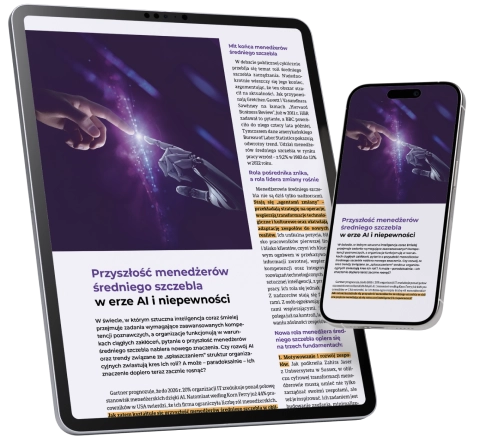
Article: Will AI Replace Mid-Level Managers?
Article

Will AI replace mid-level managers?

Key facts and conclusions in one place. In this article, you'll learn:

  • Why has the percentage of middle managers been rising since 1983, rather than declining?
  • How many of a manager's tasks could AI take over by the end of the decade?
  • What are the three pillars of the manager's new role?
  • Why do managers today have the lowest levels of engagement and the highest rates of burnout?
  • What do Gartner and Korn Ferry say about the reduction in management positions?
Download the article
Leading

Workshop Facilitators – Practitioners and Experts

Consultants, trainers, and researchers who combine neuroscience and the psychology of leadership with management practices in Polish and international organizations.

Dr. Witold Jankowski

Dr. Witold Jankowski

CEO of ICAN Institute

He leads the introduction to the program, addressing topics such as the role of a mid-level leader, the tension between strategy and day-to-day operations, and the paradoxes of leadership in the age of AI. He is the face of the ICAN NeuroManager™ program’s philosophy and guarantee.

Anna Connor-Łakomy

Anna Connor-Łakomy

Neuroscience expert, coach, diagnostician

A consultant, trainer, and researcher specializing in neuroscience and brain-based work methods. She is one of the few certified NeuroColor consultants in Europe. She is a certified Scrum Master and Assessor.

Dr. Iwo Zmyślony

Dr. Iwo Zmyślony

Change, service, and experience designer; design thinking facilitator

He has over a dozen years of experience in managing innovation processes and providing transformational consulting to change leaders. For nearly 10 years, he has been leading intensive P2P learning courses as part of the University of Warsaw’s Open University.

Dominika Krysinska

Dominika Krysinska

Expert in human capital, leadership development, and team development

She specializes in aligning corporate strategy with human capital strategy. She has completed over 300 development and consulting projects for a wide range of industries, including the energy and FMCG sectors.

Magdalena Kieferling

Magdalena Kieferling

Lecturer at the ICAN Institute, change management strategist

She has coordinated strategies for over 100 campaigns and projects at the European level. She is the recipient of the 2014 Silver Drum Award and the 2015 KTR Bronze Statuette, and the author of over 400 publications.

Piotr Stohnij

Piotr Stohnij

An expert on new marketing and generational shifts in business

He has led workshops for top-level managers at organizations across more than a dozen industries. He served as editor of the online edition of *Harvard Business Review Polska* and as president of the HR Generation Next association.

Participant Feedback

What Our Graduates Say

Find out how the ICAN NeuroManager™ program is changing managers’ day-to-day work and what those who have already completed it value most about it.
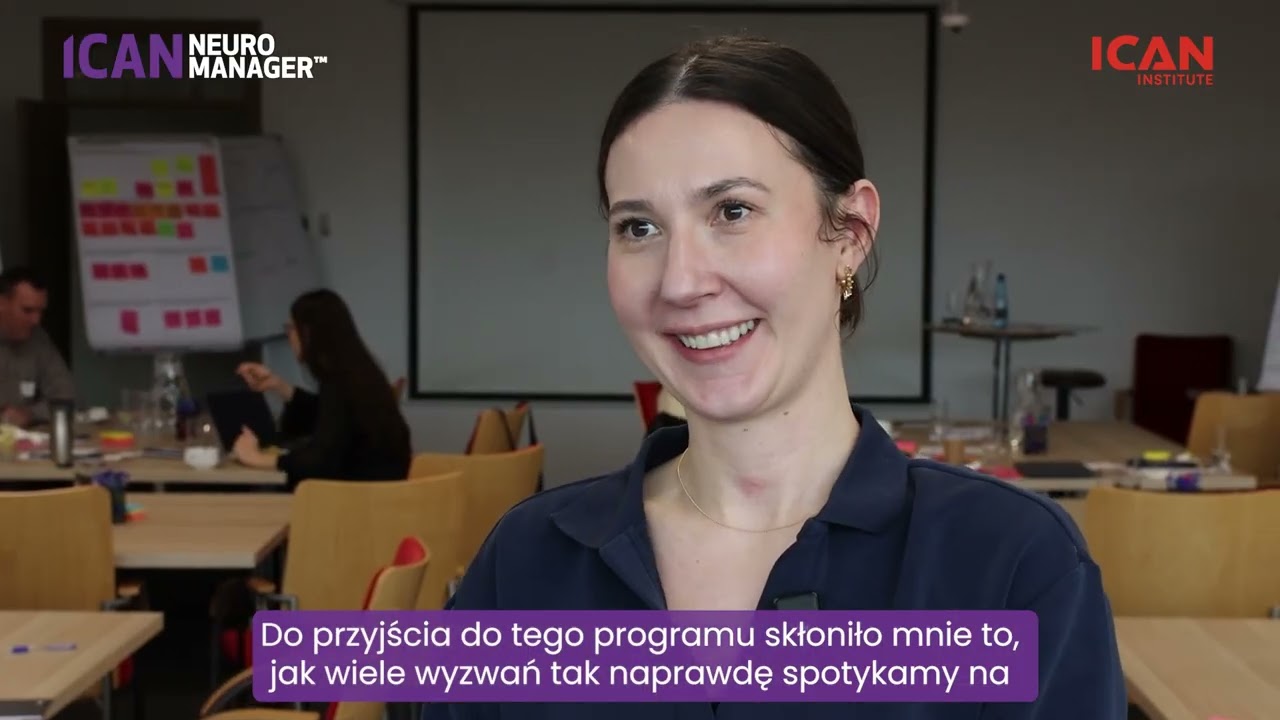
Video Review of the ICAN NeuroManager™ Program
Testimonial from an ICAN program participant

It wasn't just "another training session" with a slideshow, a notebook, and a pen. It was a fresh dose of substantive and practical knowledge at its best.

New experiences, breaking down certain barriers, but also many fond memories and new, meaningful friendships that will stay with me for a long time.

Thank you to the trainers for the fantastic lectures, the practical tools we can use to tackle our daily challenges, and the tremendous motivation you’ve given us!

See you at the ICAN Institute!

Daria Odrobińska Managing Director

A very valuable program, offering many practical insights into people and organizational management, as well as a great opportunity to exchange experiences with the other participants. I’d like to thank the other participants and the ICAN Institute for this exceptional experience.

Krzysztof Maj Head of Development

This experience deepened my understanding of how the brain influences decision-making, leadership, and communication. I gained practical tools that help me manage stress more effectively, build stronger relationships, and lead with greater awareness and effectiveness.

I would like to sincerely thank the wonderful instructors for sharing their knowledge and energy, as well as all the inspiring people I had the pleasure of meeting during this course. It was a truly valuable experience!

Zuzanna Kamińska Product and Marketing Manager

I’m taking the next step “from neuroscience to leadership” thanks to my recently earned ICAN Neuromanager certification. It’s been a truly transformative journey into the world of how the brain influences effectiveness and performance. Never stop learning!

Agata Kruszka Head of the Ophthalmology Department
4.91/5
average rating of the program
40 000+
graduates of our training programs
30 years
ICAN Institute's experience
Join them
Money-Back Guarantee After the First Session
Community of graduates

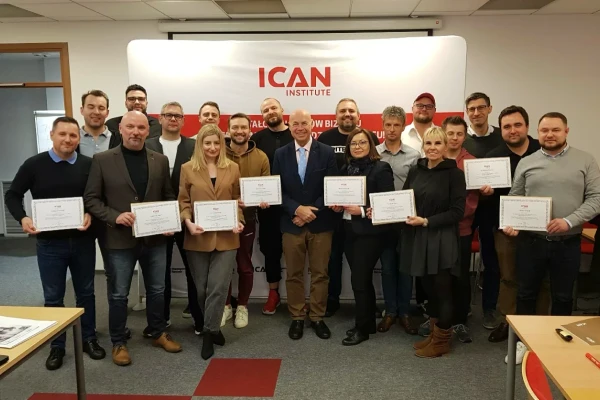
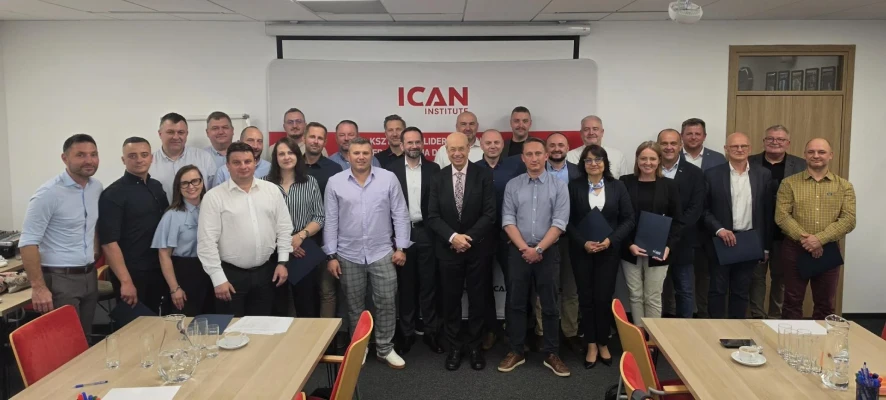
A prestigious certificate that confirms readiness for the role

40,000 graduates of ICAN Institute programs

Graduate 1
Graduate 2
Graduate 3
Graduate 4
Graduate 5
Graduate 6
Graduate 7
Medicover Salesforce Raben Provident Żywiec KIR CIMA Aplitt Euroterm PGF Imperial Tobacco and much more
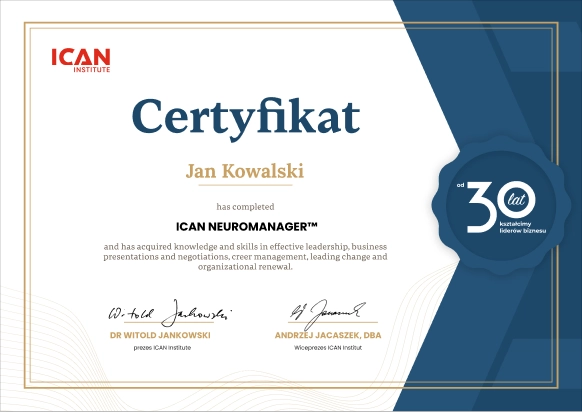
ICAN NeuroManager™ Certificate
Certificate of Completion
Each participant receives a certificate of completion for the ICAN NeuroManager™ program
Linked in
80% of graduates post their certificate on their profile
Benefit Guarantee

We take full responsibility for your results. 100% satisfaction guarantee.

We are completely confident in the effectiveness of our tools. That is why we assume all the financial risk—you can test the program before making your final decision.

1

Try it risk-free

Take part in the first session (2 days of classes) and see if the program is right for you.

2

See how we perform in practice

If you decide that this knowledge will not lead to an increase in your company's efficiency— you may withdraw without giving a reason.

3

You get 100% of your investment back

We'll refund your entire payment. No hidden catches or complicated procedures.

We're the only ones in Poland to offer you this guarantee. You won't make your final decision until you've seen the program from the inside.

Dr. Witold Jankowski
We offer this guarantee because, after 30 years and 40,000 graduates, we know that no one wants to drop out.

Dr. Witold Jankowski
CEO of ICAN Institute
Signed by Dr. Witold Jankowski

Since you have nothing to lose— what's stopping you?

Reserve a seat
Money-Back Guarantee After the First Session
Report participation

Reserve your spot in the program ICAN NeuroManager™

Join the ranks of leaders who benefit from the knowledge and tools offered by “MIT Sloan Management Review Polska.”

Cost of participation
13,999 PLN net + 23% VAT 23%
2026 Session · In-person classes · 5 two-day sessions
Warranty ICAN

Zero risk—get a refund after the first session if the program doesn't meet your expectations. No questions asked.

FormatDesktop
Duration10 training days
PaymentOne-time payment or in installments (+5%)
What's included in the price?
  • ✓Participationin 5 two-day sessions (10 training days) + Kick-off
  • ✓Access online to the resources of "MIT Sloan Management Review Polska"
  • ✓Library premium library with multimedia resources
  • ✓Smart myICAN assistant that personalizes the participant's development
  • ✓Selected ICAN Business Advisor modules
  • ✓Materials for each session (“Knowledge Bite,” tools, questionnaires)

Magdalena Witek

Magdalena Witek

Sales Director · ICAN Institute
FAQ

Frequently Asked Questions and Answers.

Do you have any other questions? Our expert will answer all your questions before you decide to participate in the program.

Reserve a spot
Who is the ICAN NeuroManager™ program designed for?
+

The program is designed for experienced leaders—operations managers, functional directors, and change leaders—who are responsible for people, results, and change.

What is the class format like?
+

The program consists of 5 two-day workshops (10 training days) in an in-person format, with sessions held once a month and a breakdown of 20% theory, 80% practice.

How much does the program cost, and what are the payment options?
+

The cost of the training is 13,999 PLN + 23% VAT. An option is available to pay in installments, which increases the cost by 5%.

What happens if the program doesn't respond?
+

If, after the first session (2 training days), you decide that the program does not meet your needs, ICAN will offer a full refund of the cost of the training.

What is the recruitment and application process like?
+

You can register via the neuromanager.ican.pl website, by phone (22 250 11 44), or by email (neuromanager@ican.pl). To register, you will need to provide the company’s information and the details of each participant.

Is artificial intelligence actually used in the program, or is it just a marketing gimmick?
+

AI is an integral part of all 10 modules—from problem analysis through conflict detection to support in negotiations— rather than an afterthought tacked onto the program.

What additional materials do I receive outside of the sessions?
+

Access to the ICAN Leadership Digital Learning Center portal, “Knowledge Pills” after each session, the ICAN Management Review archive, MIT Sloan Management Review Polska, and Harvard Business Review Polska, as well as the myICAN smart assistant.