

HR, which contributes to the company's ability to succeed
The only program in Poland that teaches HR professionals strategic thinking as a comprehensive system—from corporate strategy, through AI, work design, and culture, all the way to a measurable impact on business results.





Today, HR is at a turning point
In a world of AI, uncertainty, and mounting pressure to deliver results, traditional HR is no longer enough. AI is taking over tasks. New professions and specializations are emerging. Strategies are becoming obsolete faster than ever.
Today, executives expect HR to have a tangible impact on business decisions. It’s no longer just about managing processes and personnel matters. It’s about designing an organization that thrives in the new reality. That’s why ICAN Strategic HR Management™ teaches strategic thinking in HR—linking company strategy to decisions about people, competencies, work, and culture.
millions of new roles
will emerge simultaneously—they require new skills and new talent strategies.
Employers value AI and big data
as a key skill for the future—followed closely by analytical thinking and resilience (WEF 2023).
new roles that are already crucial today
AI trainer, prompt engineer, AI governance specialist — these roles didn’t exist five years ago.
From operational to strategic thinking. HR as a co-creator of strategy, not merely its executor.
The program helps us view HR not as a set of processes, but as a function that plays a key role in determining the quality of leadership, the organization’s ability to adapt, and the sustainability of its competitive advantage. The starting point is understanding real strategic choices and then translating them into specific organizational capabilities. This represents a fundamental shift in thinking.

HR that supports the business
Administrative and Human Resources Department
HR contributes to the company's performance
Architect of Organizational and Strategic Capabilities
This is not is "soft HR." This tough decision regarding whether whether the company can operate effectively in a world of uncertainty.
Space is limited
What you'll be able to do after completing the program. Real results.
Align the company's strategy
with HR, workforce, and competency strategies
Design an organization
ready for the new competitive landscape
Build a culture that supports execution
and not just in theory
Use AI wisely
in the field of HR and work design
Strengthen HR's influence
you speak the language of finance, data, and numbers
Create business cases
compelling business cases for HR initiatives
Participating in the program will help you understand the company’s strategy and translate it into concrete actions—instead of waiting for instructions from above.
Do you have the skills to ensure that HR has a strategic impact on the organization's success?
Take the test to see where you stand today—and what areas you should focus on. 10 questions, 2 minutes.

A program designed for HR professionals who want to make a real impact on the future of the company
HR Directors
Those who want to broaden their perspective by developing strategic and leadership skills, and prepare themselves to serve as a key link in the company’s decision-making process.
HR Managers and HR Business Partners
Those who want to better understand the company’s strategy, consciously influence the organization through HR initiatives, and collaborate more effectively with management.
HR in Companies Undergoing Change
HR leaders at organizations undergoing digital transformation, restructuring, or a change in business model.
Leaders
Responsible for organizational culture, talent development, transformation, and change management at the company.
Individuals being considered for promotion
Who want to raise awareness of business needs and demonstrate the value of their work to management.
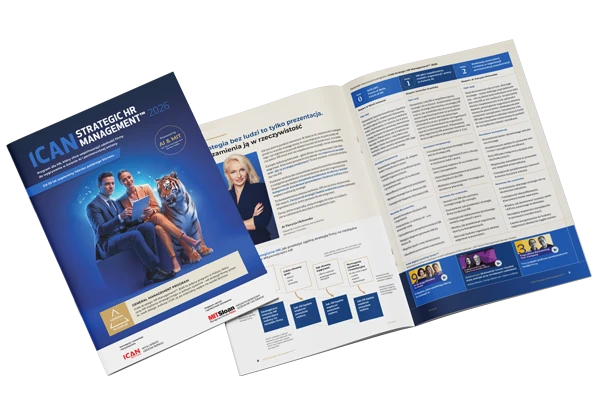
Need some time to decide? Download the full brochure.
View the training agenda, review the full list of tools, and discuss this program with your colleagues or supervisors.
- Detailed agenda for all 7 workshop sessions + kick-off
- Complete list of tools, methods, and supplementary materials
- Biographies of the presenters and organizational information
7 two-day workshop sessions. One cohesive system.
The program includes a kick-off session and seven two-day sessions (Friday–Saturday) spread out over the course of the year. Between sessions, participants work on supplementary materials and practical assignments.

- Trends shaping organizations: the AI revolution, business uncertainty, geopolitical tensions, and productivity pressures
- What is changing in the workplace, and which elements remain constant as the foundation of effective performance
- How AI Influences Decision-Making, Work Models, and the Role of a Leader
- HR Challenges and Its Role as a Strategic Partner
- Understanding Megatrends: AI, Uncertainty, and the Transformation of Work
- Interpreting Changes in Work Models and Organizational Roles
- Understanding the Impact of AI on Decision-Making and Productivity
- Identifying the skills of the future
- Strategic Thinking in HR
- The ability to assess HR maturity
- Clarity regarding the context of HR and organizational operations
- Understanding what AI changes—and what remains the same
- A Structured View of HR Challenges
- Preliminary Assessment of HR Readiness for the AI Era
- Setting development priorities
- A common language and framework for future work
- The Role of HR in Developing and Implementing Strategy
- The Relationship Between Business Strategy and HR Strategy — How to Apply It to Designing the Organization of the Future
- The transition from a position-based organization to a competency-based organization
- What kind of HR structure should a company build to ensure its success over the next 3–5 years?
- The ability to align business strategy with HR strategy
- Designing a Future-Ready Organization in Terms of People and Work
- Understanding the Impact of AI on the Value Model and Competencies
- Identifying the competencies of the future and their implications for HR
- Scenario-based and strategic workforce planning
- Clarity regarding HR’s role as a strategic partner to senior management
- Understanding how to translate a company’s strategy into HR decisions
- The ability to define the target organizational and operational model
- Knowledge of how to design a competency-based organization
- Strategies for building an organization capable of succeeding in the future
- Why strategies—despite being well-designed—are not effectively implemented
- Barriers to implementation: lack of consistency in actions, overwhelming the organization with change, blurring of priorities
- The role of HR as an integrator of activities across various functions
- Modern Approaches to Goal and Performance Management
- Understanding the barriers to effective strategy implementation
- Designing coherent execution and performance management systems
- The Role of HR as a Facilitator of Cross-Functional Activities
- Supporting managers in leading teams through change
- The ability to design and communicate change initiatives
- Understanding why strategies are not being implemented effectively
- The ability to identify key barriers to execution
- Knowing how to adapt goal and KPI systems to a changing environment
- Better preparation for building an organization capable of continuous change
- Tools to support managers in transformation processes
- Redefining the employee experience — we start with work design
- What should work look like to be productive, avoid overworking people, and help retain them in the company
- Redesigning roles and tasks in the context of AI — the division of labor between humans and technology
- HR Challenges in Designing Work That Supports Both Performance and People
- Designing Jobs and Roles in the Context of AI
- Understanding the division of tasks between humans and technology
- Managing Cognitive Load and Work Quality
- Building a cohesive employee and manager experience
- Segmentation of experiences for different employee groups
- Understanding how work design affects productivity and retention
- The ability to redefine roles and tasks in an AI environment
- Knowledge of how to design experiences tailored to different groups
- Understanding the manager's role in shaping the work experience
- How culture works in practice—as a system of norms, decisions, and behaviors
- The Impact of Culture on Responsibility, Collaboration, and the Ability to Learn
- When does culture support transformation, and when does it become an obstacle?
- Assessing a culture’s capacity for change
- HR’s operational collaboration with management on corporate culture
- Understanding the role of culture as a mechanism for implementing strategy
- An Analysis of the Impact of Culture on Decisions, Behaviors, and Outcomes
- Identifying Cultural Barriers in the Transition Process
- Working with management to develop a corporate culture in a practical and measurable way
- Understanding the relationship between culture, collaboration, and responsibility
- Understanding how culture influences the effectiveness of strategies and transformations
- The ability to distinguish between actual and professed culture
- Tools for assessing organizational culture in terms of adaptability
- Approaches to working with management on culture as a practical system of operation
- Biological and psychological factors influencing human performance in an organization
- What enables people to perform at a high level in environments marked by pressure and uncertainty
- The Role of Leaders in Creating an Environment That Boosts Motivation and Engagement
- How Diversity and Inclusion Impact Team Effectiveness
- Understanding the neurobiological mechanisms that influence effectiveness
- Designing a work environment that promotes concentration and motivation
- Managing attention, energy, and cognitive load
- Identifying biases and their impact on decisions and effectiveness
- The Use of Models (e.g., Flow, Fun–Fear–Focus) in Management Practice
- The ability to create conditions conducive to concentration and efficiency
- An understanding of the mechanisms that lead to burnout and a decline in motivation
- Knowing how to leverage people’s natural aptitudes at work
- Principles for building an organization where people perform at a high level
- Building a genuine value proposition for employees — EVP as a component of corporate strategy
- EVP related to culture, management quality, and work architecture
- How to design an EVP for different employee segments
- Approaches to talent development, the creation of competency models, and the design of development systems
- Designing EVP as part of an organization's strategy
- Tailoring EVP to different employee segments
- Understanding the Role of the EVP in the World of AI and Evolving Careers
- Identifying and developing employee talent and potential
- Developing competency models and development systems
- Integrating EVP with corporate culture, management quality, and work experience
- Understanding what constitutes an attractive value proposition for employees today
- The ability to design an EVP that aligns with the company’s strategy and the realities of the workplace
- Understanding how to integrate EVP with competency development and talent management
- Tools for identifying potential and building development systems
- Building HR's influence in relations with management and stakeholders
- The Role of Finance as the Primary Language of Strategic Communication
- How to Link HR Activities to Financial Results — Identifying Costs and Benefits
- How to discuss "soft" areas in a way that is convincing to the board
- The Role of Personal Branding in HR
- Developing a business case for HR initiatives
- Understanding finance and its application in communicating with management
- The Use of People Analytics and Data in Decision-Making
- Conducting business dialogue and effective persuasion
- Personal Branding and Stakeholder Management
- Identifying the costs, benefits, and impact of HR initiatives
- The ability to present HR initiatives in business and financial terms
- The ability to develop compelling business cases
- Better use of data and analytics in communication with management
- Strengthening HR's role as a strategic partner
Knowledge portal and additional resources
Practitioners and experts— not theorists
You’ll grow under the guidance of experts who have gained experience at Polish and international companies.






ICAN Strategic HR Management™ graduates — the leaders of tomorrow
The skills acquired are certified by the ICAN Institute
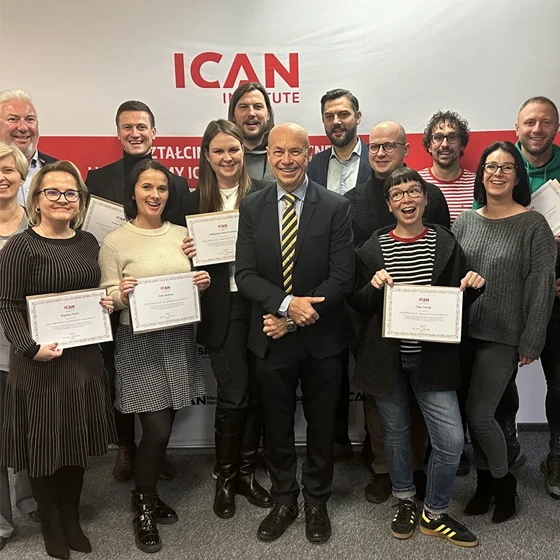
Every participant in the ICAN Strategic HR Management™ program will receive a prestigious certificate. This credential is highly valued in the job market and sought after in both recruitment processes and internal succession planning.
About 80% of graduates post their certificates on their social media profiles—particularly on LinkedIn.

Quality Guarantee: No Risk and Money-Back Guarantee
We know that investing in a comprehensive, year-round program can be a cause for concern. That’s why we’re the only ones in Poland to offer you a unique quality guarantee:
If, after the first thematic session (2 training days), you decide that the program does not meet your expectations, you may withdraw from the program and receive a full refund.
Yes, we’ll give you a 100% refund. There’s no risk involved in participating in the training—just opportunities for growth and tangible results.

The training takes place in Warsaw
The training takes place at the ICAN Institute headquarters. It is a convenient, easily accessible location right next to the Wilanowska Metro station. This means participants will have no trouble getting there.
ICAN Strategic HR Management™ consists of 7 two-day sessions (14 days in total), which take place once a month on Fridays and Saturdays. You can plan your attendance in advance or take advantage of the option to make up a session at a later date.
Open in Google Maps
Business Club – a forum for strategic debate on the future of HR
Once you’ve completed the training, you can join the HR Club—a dynamic community of nearly 1,500 professionals. It’s a space for people who want to tangibly strengthen the role of HR in organizations and develop HR departments as strategic business partners.
Together, we are creating a space for open, constructive debate about the future of HR, for sharing experiences, and for developing modern solutions for organizations.
Learn moreSign up for the program.
- 7 sessions + kick-off
- ICAN Online Learning Center
- MIT Sloan Management Review Poland
- Premium Library — Multimedia
- myICAN Assistant
- ICAN Institute Certificate

Magdalena Witek
Frequently Asked Questions
If you are unable to attend a class for valid reasons, you can make it up with another group. All you need to do is notify us of your absence in advance.
Between sessions, participants complete “prework”—introductory tasks related to the session’s topic that they complete on their own. This ensures that the entire group starts with the same level of knowledge and can focus on practice and exercises during the session with the expert.
The portal contains not only training materials but also additional content and activities, including certified ICAN Business Advisor® online training courses and content from our business magazines. Here you will find many examples of tools, methods, and ready-to-use templates that you can apply in your work immediately after the training.
This is due to the different nature of virtual teaching compared to “live” classroom instruction. More frequent but shorter sessions are intended to prevent fatigue caused by spending too much time in front of a computer and a decline in concentration.