
Stop experimenting with AI in marketing.
Start managing it
instead
A 4-day development program for CMOs that transforms scattered AI experiments into a single, manageable team workflow. You’ll develop a 90-day implementation roadmap for your company.





The chaos caused by AI in a team comes at a price — and you’re probably already paying it
In 2024 and 2025, experimenting with AI in marketing was understandable—everyone was learning, and no one knew what worked. Today, the situation is different. Marketing directors don’t have a problem with the tools. Most are already using them. Instead, they face a different problem—their teams are using AI inconsistently, without standards, quality control, or a decision-making framework.
This chaos comes at a high cost. In an organization with an annual marketing budget of several million zlotys, six months of uncoordinated AI experiments can consume 5–10% of the budget —on campaigns lacking direction, content that needs revisions, and tools that no one ends up using.
Three things have changed over the past 12 months
CEOs and CFOs are no longer satisfied with the answer, “We’re experimenting with AI.” They expect a concrete plan, measurable results, and a clear narrative about where AI creates value and where it generates costs. Executives without such a narrative are in a weak position when negotiating next year’s marketing budget.
Today, one in four product-related queries goes to an LLM, not to Google. A brand that doesn’t have a deliberate LLM visibility strategy loses visibility at key moments in the customer journey. This isn’t an SEO issue. It’s a brand strategy issue.
AI makes it possible to produce content on a scale that was unthinkable a year ago. Without conscious decisions about what to scale and what to leave under human control, brands lose their originality, voice, and unique selling point. Scale has become a risk, not just an advantage.
Each of these three changes requires a decision at the level of the marketing director. The longer an organization operates without a framework for working with AI, the higher the cost of getting things in order later on.

The Three Pillars of the Program AI Marketing Transformation Program™
We don't teach prompts or how to work with AI at the level of a specialist. This is a program that combines strategic decision-making, transforming the marketing system, and building a AI-ready organization.
The program teaches how a marketing leader should make decisions in the world of AI: what to automate, what to monitor, where AI creates value, where it increases risk, and how to assess its impact on marketing as a function.
The program highlights changes in the customer journey, brand visibility in LLMs, shortening the customer decision-making process, new sources of insights, and the evolving role of content. It presents AI as a shift in the rules of marketing—not just as another technology.
We don't focus on individual productivity with AI. The program is designed to organize AI at the team and marketing function levels: workflows, roles, standards, governance, and a 90-day roadmap.
A Specific Outcome of the Program: AI Marketing Transformation Blueprint
Each participant develops their own Marketing AI Transformation Blueprint. This is a workbook of about 8–12 pages (plus attachments) that allows you to present your marketing transformation strategy to the CEO.
The Blueprint consists of six sections:
Marketing Challenge Map
A map of the marketing challenges you want to address.
A marketing problem has been identified and needs to be solved.
The Impact of AI on Customers, the Market, and the Marketing Function
How AI Is Changing Your Customers, the Customer Journey, and Your Team's Work.
An Analysis of the Impact of AI on Customers and the Marketing Function.
Decision layer
Key Decisions: What to Automate, What to Monitor, Where AI Creates Value, and Where the Risks Lie.
A decision-making framework for working with AI.
AI Use Cases and Workflows
Specific solutions, workflows, and systems for working with AI.
AI workflows designed for the team.
Operating Model and Governance
Roles, quality standards, checkpoints, work procedures.
Operating Model and Governance of the Marketing Function.
90-Day Marketing AI Roadmap
A specific action plan: priorities, owners, resources, risks, and checkpoints.
Marketing AI Transformation Blueprint and 90-Day Action Plan.
How We Work with You in the Program
Each element of the program leads to a single goal: a complete Blueprint for your organization’s marketing transformation.
A total of 8 thematic modules, each concluding with an exercise, such as: an audit, a workshop, or the application of knowledge. The results of the exercise are fed into Blueprint.
Experts combine engineering, technological, and managerial expertise.
Between the first and second sessions, participants work independently on the first part of the Marketing AI Transformation Blueprint:
- diagnosis of a marketing problem,
- AI impact analysis,
- Identification of management decisions to be made.
The combination of our experts’ experience and our hands-on work on your actual problem provides you with a ready-to-implement marketing transformation plan, complete with a specific 90-day roadmap.
Is your marketing ready for the AI era?
Check to see if you have a structured approach to managing AI in marketing—or if you’re operating without a decision-making framework and clear lines of responsibility.
10 questions · YES/NO answers · about 2 minutes · results with interpretation right away

A program for people, who are responsible for marketing at the strategic level
We recommend the AI Marketing Transformation Program™ to leaders who are facing the challenge of organizing their work with AI in a manageable way and charting the course for the technological transformation of marketing.
-
CMO
Marketing directors responsible for strategy, budget, and the team.
-
Marketing Directors
Marketing leaders in medium and large organizations (B2B, B2C, SaaS, e-commerce).
-
Head of Marketing
Marketing executives at scale-up, fintech, and technology companies.
-
Head of Growth
Leaders responsible for growth, customer acquisition, and performance.
-
Founders
Company founders who effectively serve as CMOs and make key marketing decisions.
-
Leaders of the Transformation
Those responsible for streamlining marketing operations in the face of AI.
Do you face similar challenges?
Regardless of industry or organization size, the marketing directors we speak with describe the same four challenges:
If you're dealing with at least one of these, then this program is for you.
Schedule a callEverything you need to know — in one brochure
Download the free brochure for the AI Marketing Transformation Program™ and learn more.
- A detailed overview of each session.
- The Structure of the Marketing AI Transformation Blueprint.
- Cost comparison: our program, consulting, full-time position.
- Program price and schedule.
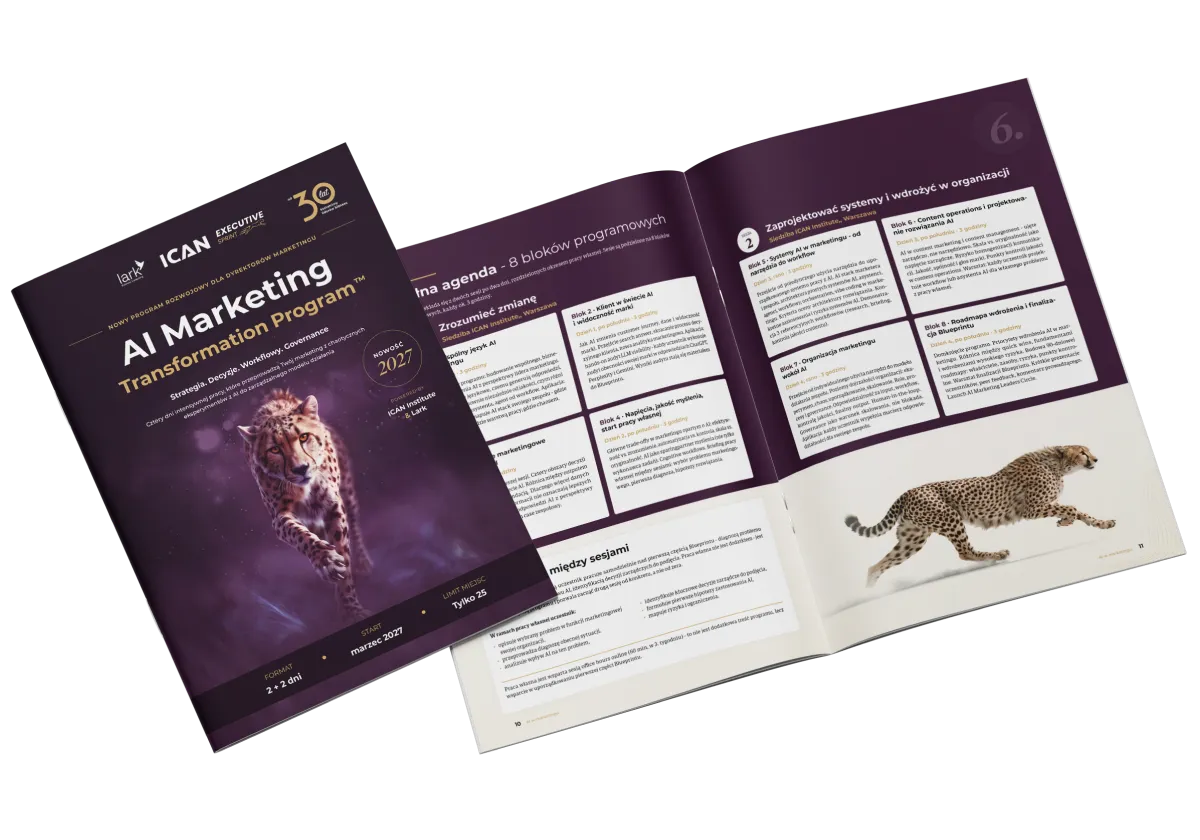
How are we different from other training courses on AI in marketing?
Most AI courses teach tools and prompting, focusing on the personal effectiveness of professionals. See why the AI Marketing Transformation Program™ will be better for CMOs.

|
Tool Courses
|
AI Strategy Programs (General)
|
||
|---|---|---|---|
|
Specialist
|
C-level (in general)
|
CMO / Chief Marketing Officer
|
|
|
Prompts, apps, automations
|
An AI Strategy for the Entire Organization
|
Marketing function: decisions +
organization
|
|
|
List of prompts, know-how
|
General Strategic Knowledge
|
Marketing AI Transformation
Blueprint
|
|
|
Individual Productivity
|
Organizational Vision
|
Workflowy + governance +
roadmap
|
|
|
Online / on-demand
|
Conferences, executive briefings
|
Executive cohort, 4 days
intensive
|
You don't need another AI tool—you need a strategy and a plan.
You’ll walk away with a decision-making framework and a 90-day roadmap—before uncontrolled AI experiments eat up your marketing budget.
Transform your marketing from chaotic AI experiments into a manageable operating model.
Schedule a callWhat are the benefits for you, the marketing team, and the organization?
You won't just gain general knowledge about AI; instead, you'll receive a concrete plan for changing the way your marketing operates. You'll see improvements in 5 areas where marketing directors feel the most pressure:
| Area | What Improves After the Program |
|---|---|
|
Less organizational chaos
|
The team stops using AI in an ad-hoc manner; common work standards, roles, and quality control checkpoints are established. |
|
Better decisions, not just faster ones
|
A leader understands the difference between AI output and insight; they have a framework for deciding “what to automate and what to monitor.” |
|
Higher team productivity
|
Workflowy AI for repetitive tasks (research, briefing, content support); the team stops manually performing work that can be systematized. |
|
Secure Content Scaling
|
Content operations designed so that scaling doesn't come at the expense of originality or the brand's voice; clear quality control points . |
|
Brand Visibility in the Age of AI
|
Audit of brand presence in ChatGPT/Perplexity/Gemini responses and the strategic decisions that result from it. |
4-day workshop in an executive format
The program consists of two two-day sessions, separated by a period of independent study. The sessions are divided into 8 program blocks.

- Building a Shared Business Understanding of AI from a Marketing Leader’s Perspective
- What are language models, and why do they generate responses that sound reasonable regardless of their quality?
- What is the difference between a tool and an assistant, and between an agent and a workflow?
- Mapping Your Team's AI Stack — Where AI Is an Application, Where It's a Work Layer, and Where It's Chaos
- Team AI Stack Map — A Starting Point for Diagnosis
- How AI Is Changing the Customer Journey, Data, and Brand Visibility
- The transition from search to answer, streamlining the customer's decision-making process
- New Marketing Analytics — What It's All About
- LLM Audit of Participant Brand Visibility in ChatGPT, Perplexity, and Gemini Responses
- LLM Visibility Audit — Section 2 of the Blueprint
- Four Areas of Marketing Decisions in the World of AI
- The Difference Between AI Output, Insights, and Recommendations
- Why More Data and Faster Access to Information Don't Mean Better Decisions
- Evaluating the Quality of AI Responses from a Leader's Perspective
- Exercise: Team Decision-Making Case Study
- Key trade-offs in AI-driven marketing: effectiveness vs. understanding, automation vs. control, scale vs. originality
- AI as a sparring partner for thinking, not just a task executor; cognitive workflows
- Briefing on independent work between sessions: selection of a marketing problem, initial analysis, solution hypotheses
- Independent Study Briefing — Start of Sections 1 and 3 of the Blueprint
- Describes a selected issue related to the marketing function of their organization
- Assesses the current situation
- It analyzes the impact of AI on this issue
- Identifies key management decisions that need to be made
- Formulates initial hypotheses regarding the application of AI
- Identifies risks and limitations
Independent work is supported by an online office hours session (60 min, in Week 3), which helps students organize the first part of the Blueprint.
- The Marketer's and Team's AI Stack, Architecture of Simple AI Systems
- Assistants, agents, workflows, orchestration, and coding culture in marketing
- Criteria for Evaluating Solution Architecture
- Specific Applications and Risks of AI Systems
- Demonstration of 3 reference workflows (research, briefing, content quality control)
- AI in Content Marketing and Content Management — From a Management Perspective, Not a Tool-Based One
- Scale vs. Originality as a Management Tension
- The Risk of Homogenization in Communication; Quality, Consistency, and Brand Voice
- Quality Control Checkpoints in Content Operations
- Workshop: Designing a workflow or AI assistant to address the participants' problem
- Workflow Design — Section 4 of the Blueprint
- The transition from individual use of tools to a team-based model
- Organizational maturity levels: experimentation, chaos, order, scaling
- Roles, Processes, and Governance
- Responsibility for input, workflow, quality control, and final output
- Governance as a Prerequisite for Scaling, Not an Obstacle
- Responsibility Matrix for Your Team
- Accountability Matrix — Section 5 of the Blueprint
- Priorities for Implementing AI in Marketing
- The Difference Between Quick Wins, Foundations, and High-Risk Implementations
- Developing a 90-Day Roadmap: Stakeholders, Resources, Risks, and Milestones
- Blueprint Finalization Workshop; participant presentations, peer feedback, comments from an expert
- 90-Day Roadmap — Section 6 of the Blueprint + Presentation
Workshop Facilitators — practitioners and experts
Four individuals with a proven track record in implementation and research: AI implementations in industry and commerce, marketing effectiveness audits, digital cognition research, and transformation programs for executive boards.




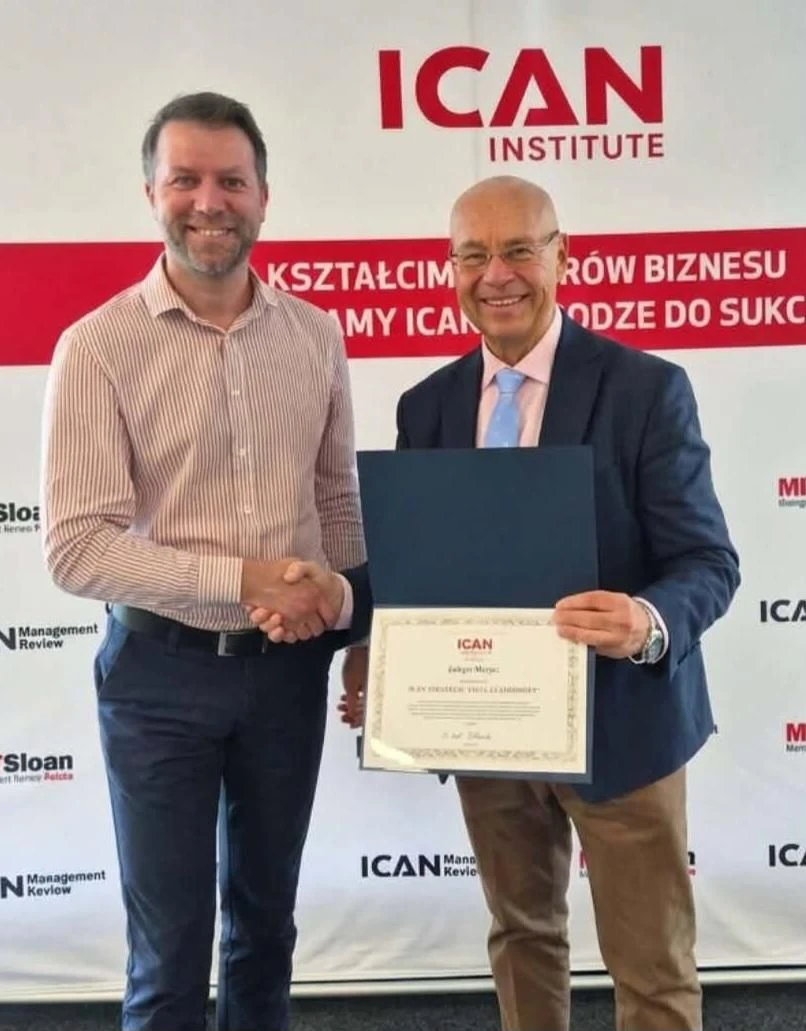
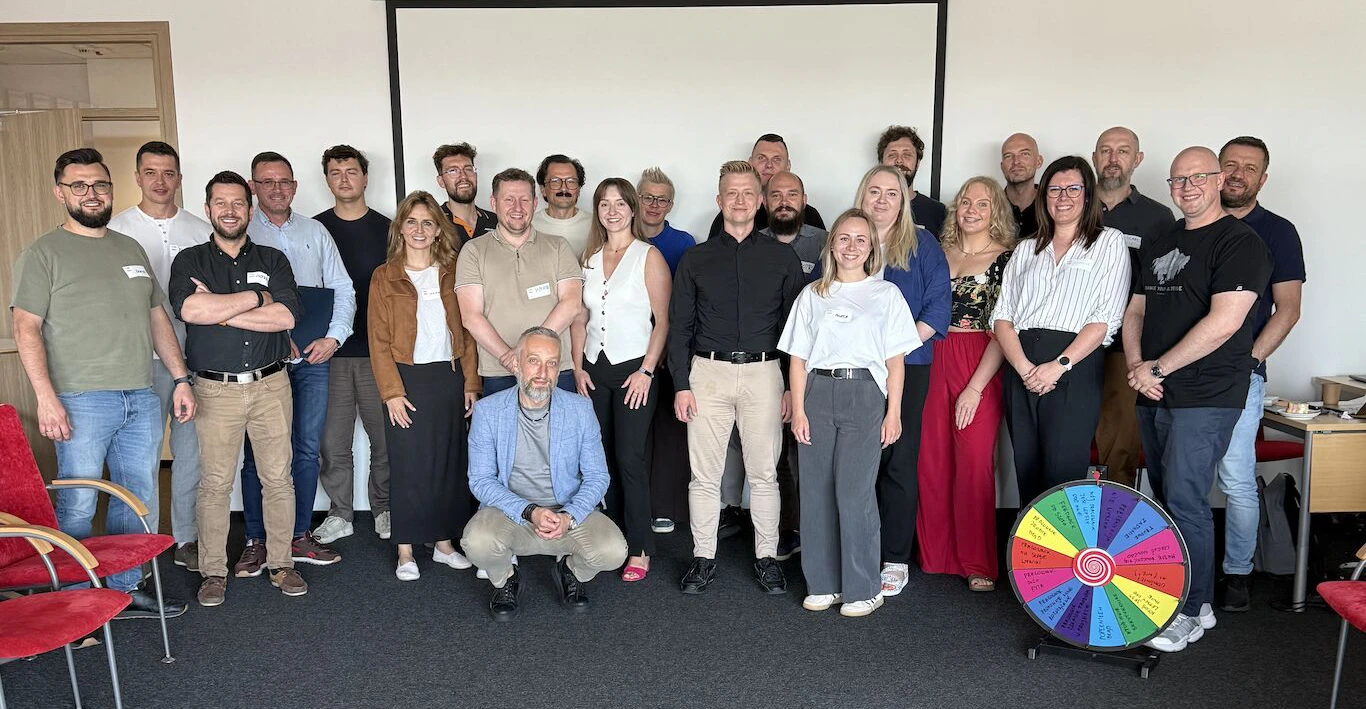
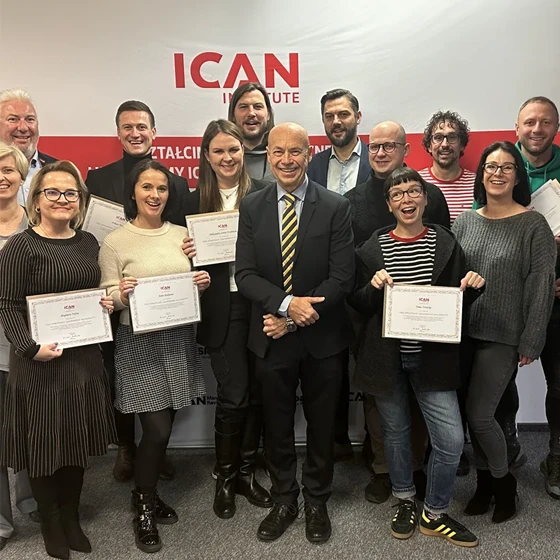
What Program Participants Say ICAN
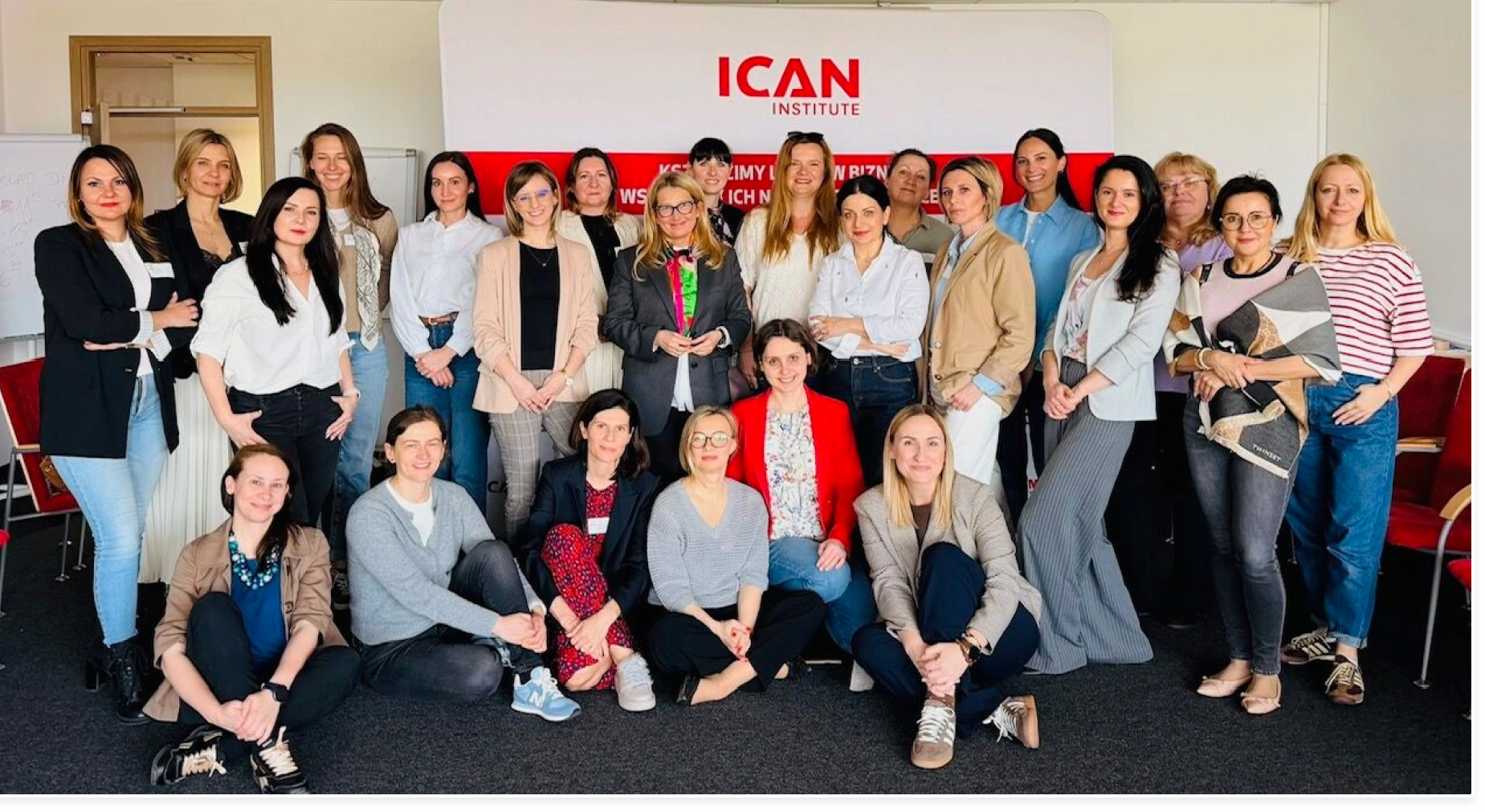
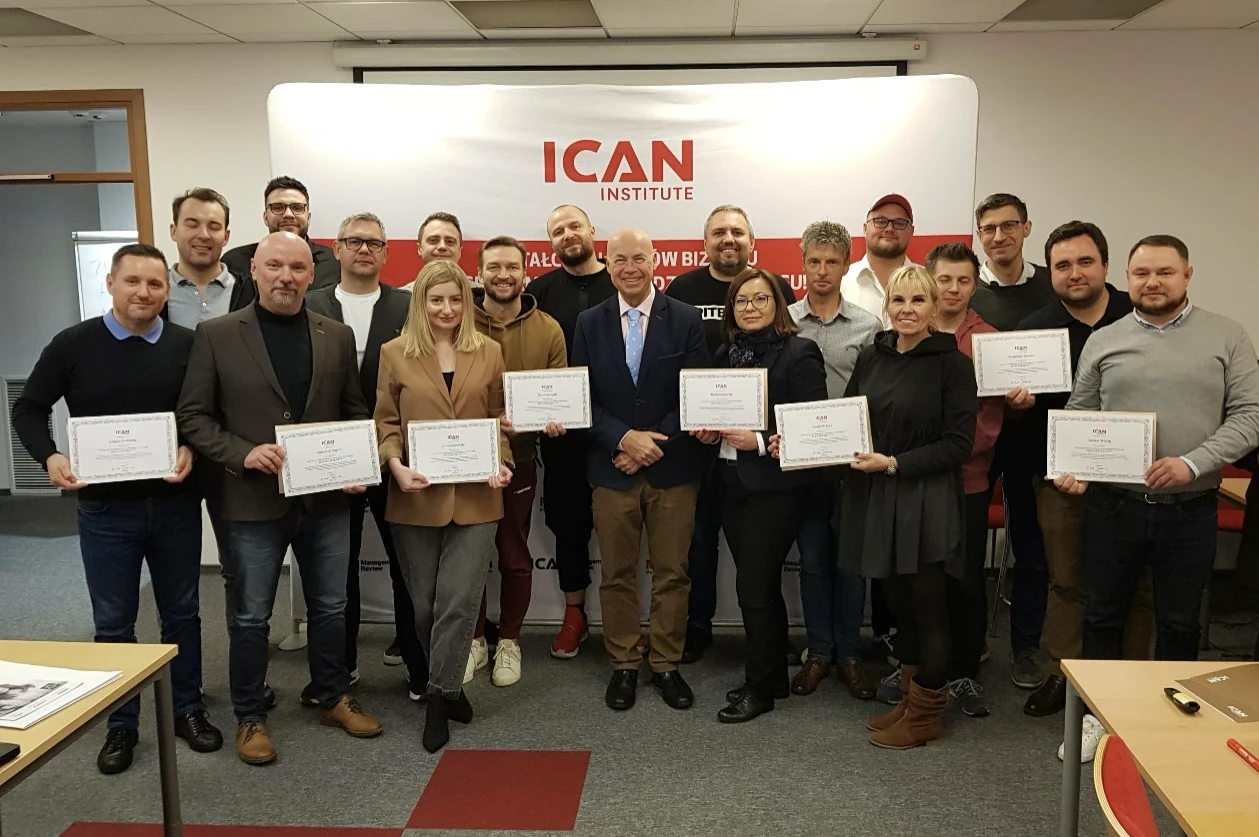
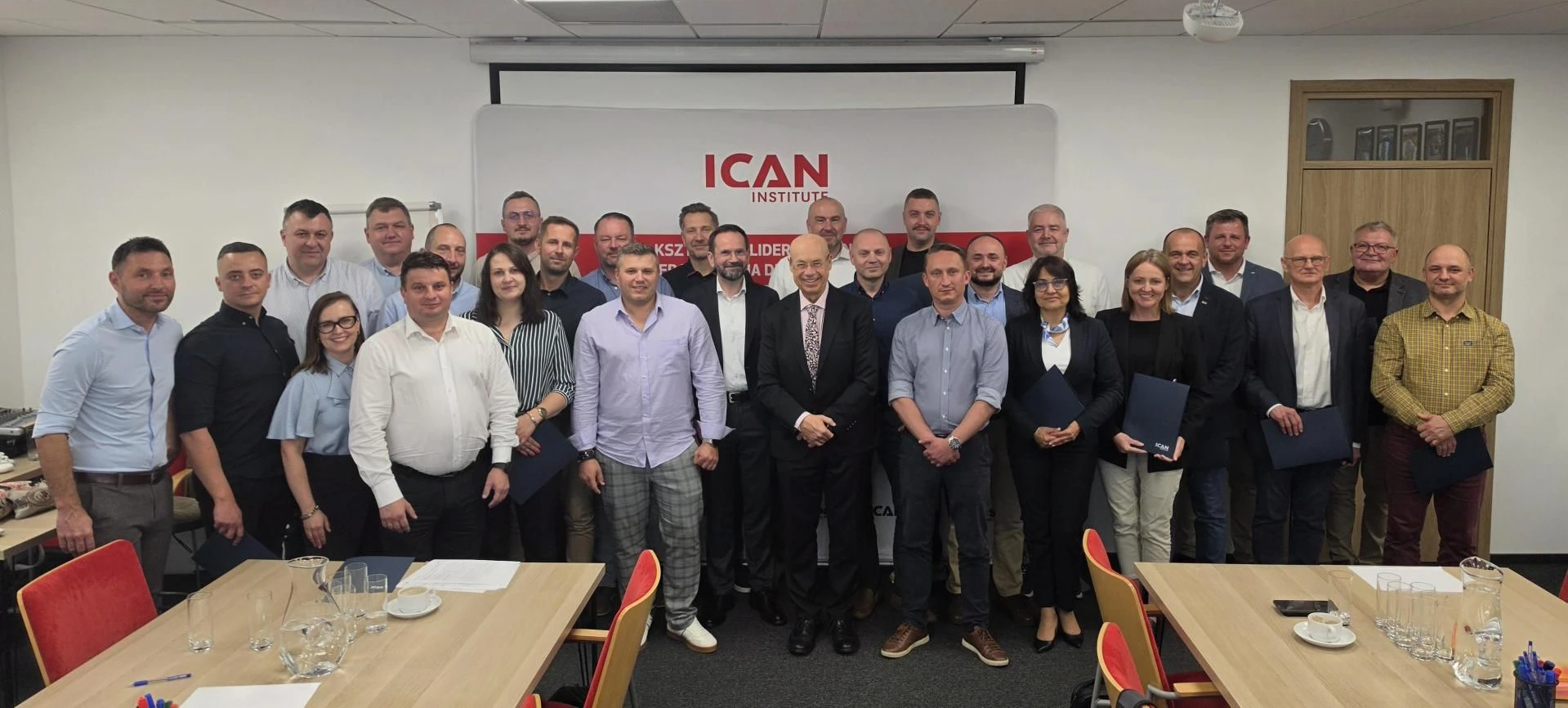
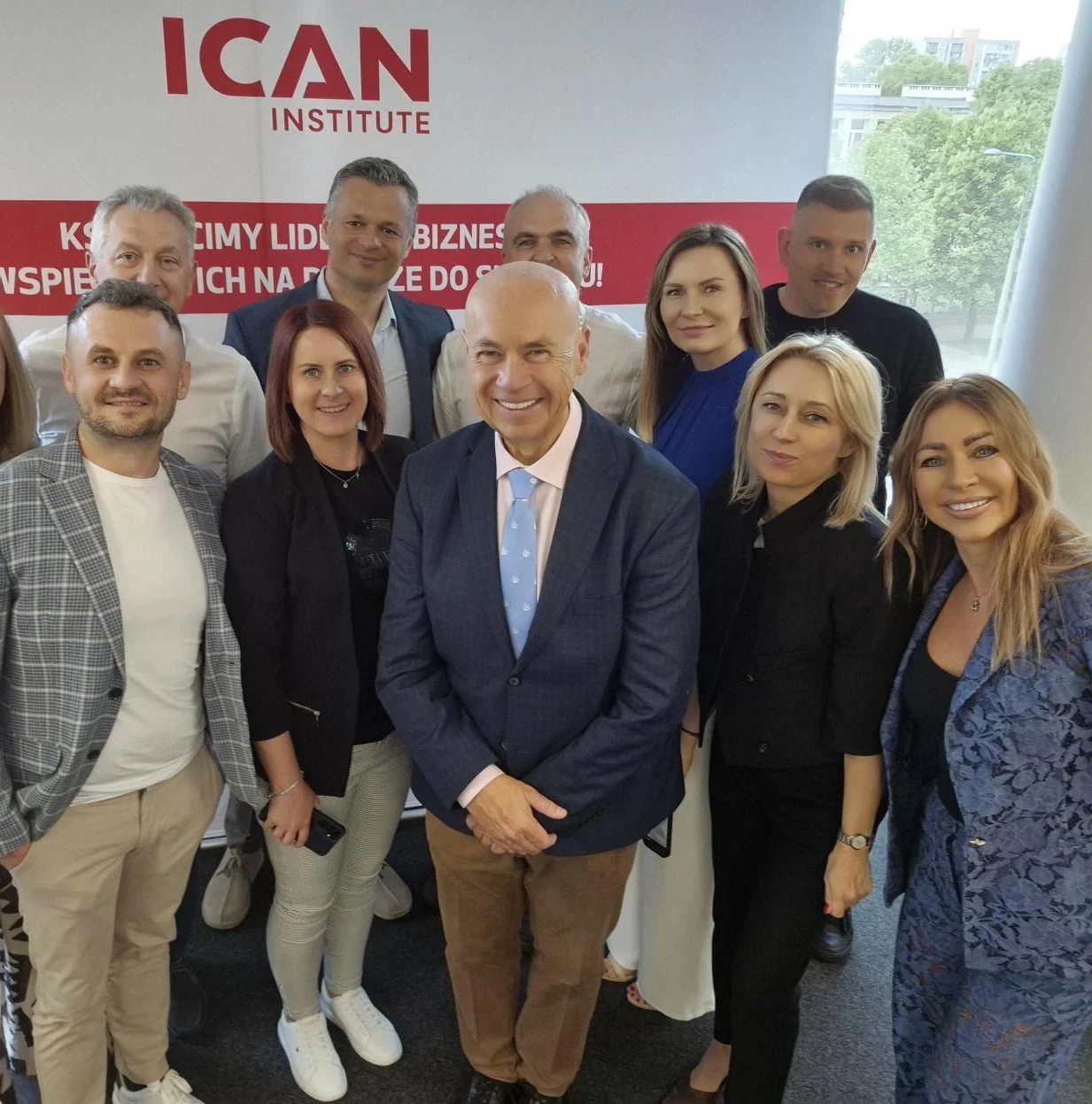
More than 40,000 managers have completed ICAN Institute programs. 200+ organizations from various industries. Below are some testimonials from graduates.





Join a community of marketing leaders who are building a manageable, AI-powered model
40,000+ graduates of ICAN Institute programs
 and much more
more
and much more
more
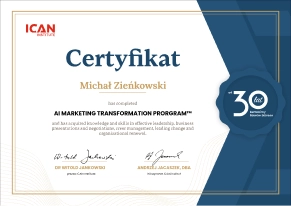

We offer this guarantee because, after 30 years and 40,000 graduates, we know that no one wants to drop out.
We take full responsibility for your results. Guarantee: 100% satisfaction.
We are completely confident in the effectiveness of our tools. That's why we assume all the financial risk— you can test the program before making your final decision.
Take part in the first session (2 days of classes) and see if the program is right for you.
If you decide that this knowledge will not lead to an increase in your company’s efficiency, you may withdraw without giving a reason.
We'll refund your entire payment. No hidden catches or complicated procedures.
Since you have nothing to lose—what's stopping you?
Reserve your spot in the program
The program begins in March 2027. Limited to 25 participants. The Early Bird rate applies to registrations submitted by November 30, 2026.
- ✓4days of in-person workshops
- ✓Online office hours session
- ✓Independent studybetween sessions
- ✓AI Marketing Transformation Blueprint Template
- ✓Program Materials
- ✓Certificateof Completion

Magdalena Witek
Frequently Asked Questions .
Do you have any other questions? The program coordinator will answer all your questions before you make a decision.
Report participation